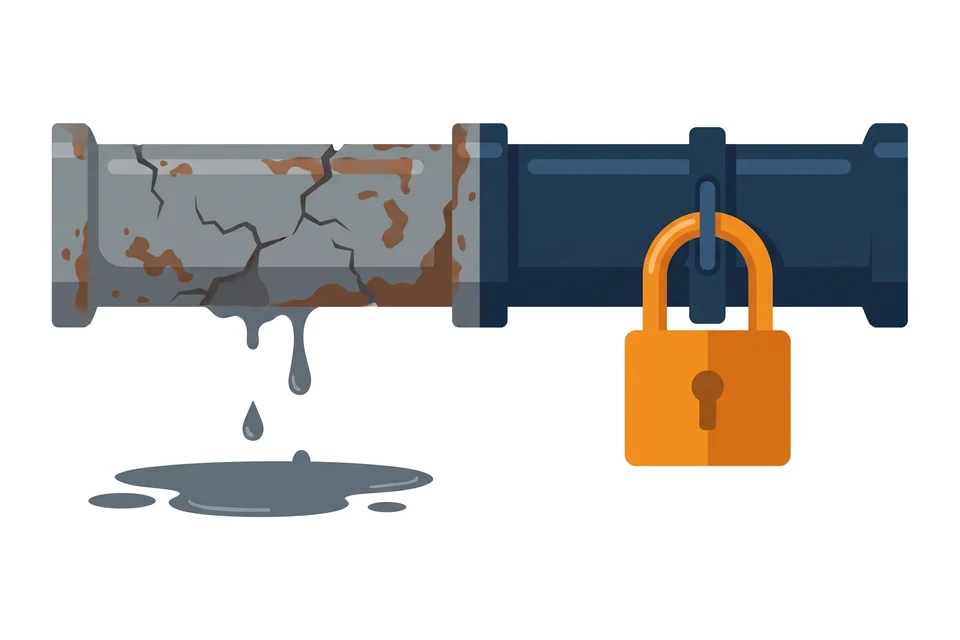


Most merchants judge a new customer by the revenue they bring in, then apply their average margin to it. A $500 customer at a 10% margin is worth $50. That arithmetic feels prudent, but for a business with real fixed costs it is wrong. A genuinely new customer is worth much more than your average margin suggests, and the reason is in your cost structure, not in anything special about the customer.
New customers don’t bring new rent
For most growing businesses, a large share of costs is fixed or semi-fixed: rent, insurance, core staff, software subscriptions, compliance, warehousing. These costs stay largely the same whether you do $5 million or $5.5 million in sales.
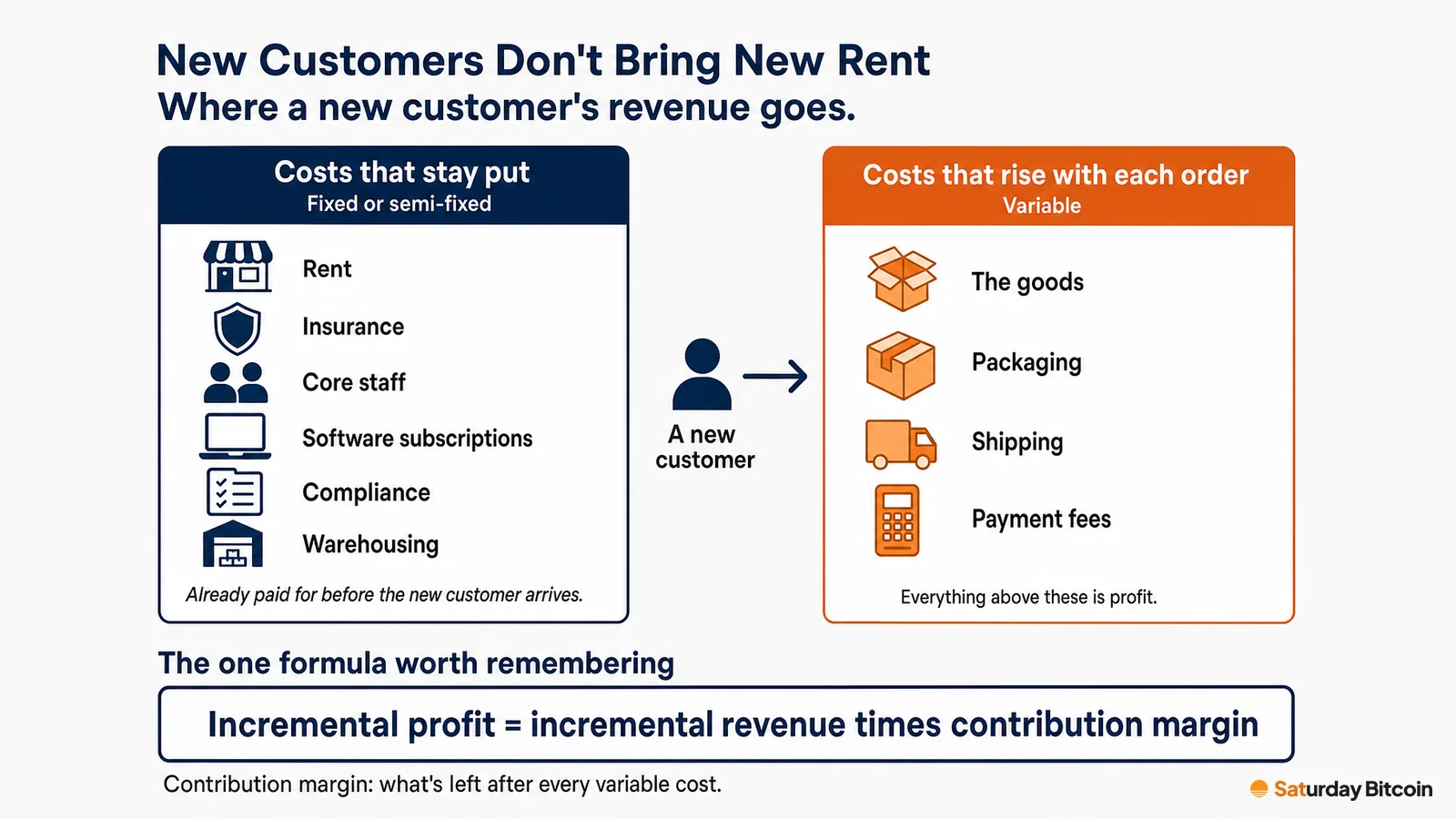
So when a new customer arrives, they don’t bring new rent or payroll with them. Their revenue has to cover only the costs that rise with each order: the goods, packaging, shipping and payment fees. Everything above that is profit. Finance teams call what’s left the contribution margin, and it gives you the one formula worth remembering:
New customers don’t bring new rent or payroll.
Incremental profit = incremental revenue × contribution margin.
Note what this does not say. Contribution margin sits below gross margin, because it subtracts every variable cost, so a new dollar of sales is never worth more than a dollar or more than your gross margin. What it is worth is far more than your average profit per dollar, because your fixed costs are already paid for.
An illustration
Take a hypothetical specialty online merchant. The numbers are illustrative, not data.
Revenue rose 5%. Profit rose 17.5%. Each new dollar earned 35 cents, against an average of 10 cents. That ratio, your contribution margin divided by your operating margin, is your operating-leverage multiplier: 3.5x here. Incremental revenue lands at that multiplier, not at your blended margin.
At thin margins, the multiplier gets bigger
The thinner your operating margin, the larger the gap between what a new customer earns you and what your average customer earns you. Holding contribution margin at 30%:
This is the argument thin-margin merchants often miss when they evaluate a new channel. They look at the per-transaction economics and see a small dollar amount. What they should be evaluating is how much incremental customers contribute to covering fixed costs over their lifetime. At thin margins, every incremental customer is disproportionately valuable.
Two cautions. Leverage cuts both ways: losing customers hurts profit just as disproportionately. And the multiplier depends on your cost structure. Businesses whose costs are mostly fixed, such as hotels, subscription and digital products, and appointment-based services, have high leverage. Retailers whose goods and shipping scale with every order have less. Know your own number.
Every incremental booking falls to the bottom line
Travel and hospitality show this most clearly. A hotel room that sits empty tonight still carries the mortgage, maintenance, staffing, utilities and property taxes. The cost of serving one more guest is small next to the room rate.
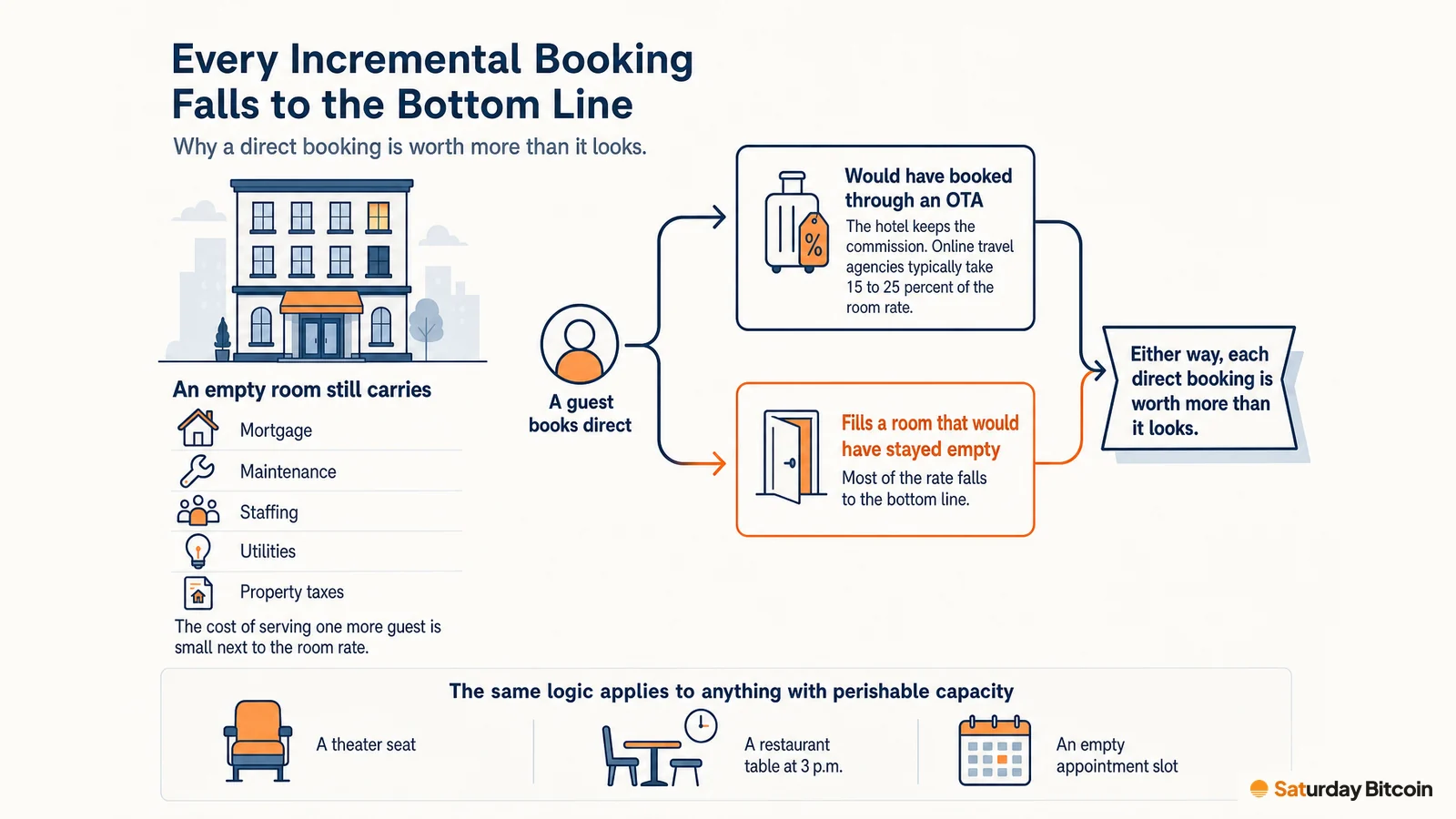
Now add the aggregator. Online travel agencies typically take 15 to 25 percent of the room rate. When a guest books direct instead, two things can happen. If the guest would otherwise have booked through an OTA, the hotel keeps the commission. If the guest fills a room that would have stayed empty, most of the rate falls to the bottom line. Either way, each direct booking is worth more than it looks.
The same logic applies to anything with perishable capacity: a theater seat, a restaurant table at 3 p.m., an empty appointment slot.
Growth compounds through the cost structure
Operating leverage is only the first effect. As volume grows, other benefits follow:
- Procurement leverage. Larger orders can earn better supplier terms, volume discounts or allocations that smaller buyers can’t get.
- Shipping efficiency. Carriers price in volume tiers, and fuller pallets and pickups lower your cost per unit.
- Fixed-cost absorption. Your lease, core team, technology and insurance are spread over more revenue.
- Marketing efficiency. Whatever you already spend on brand, content and search is spread over a larger base, so your effective acquisition cost falls across the board.
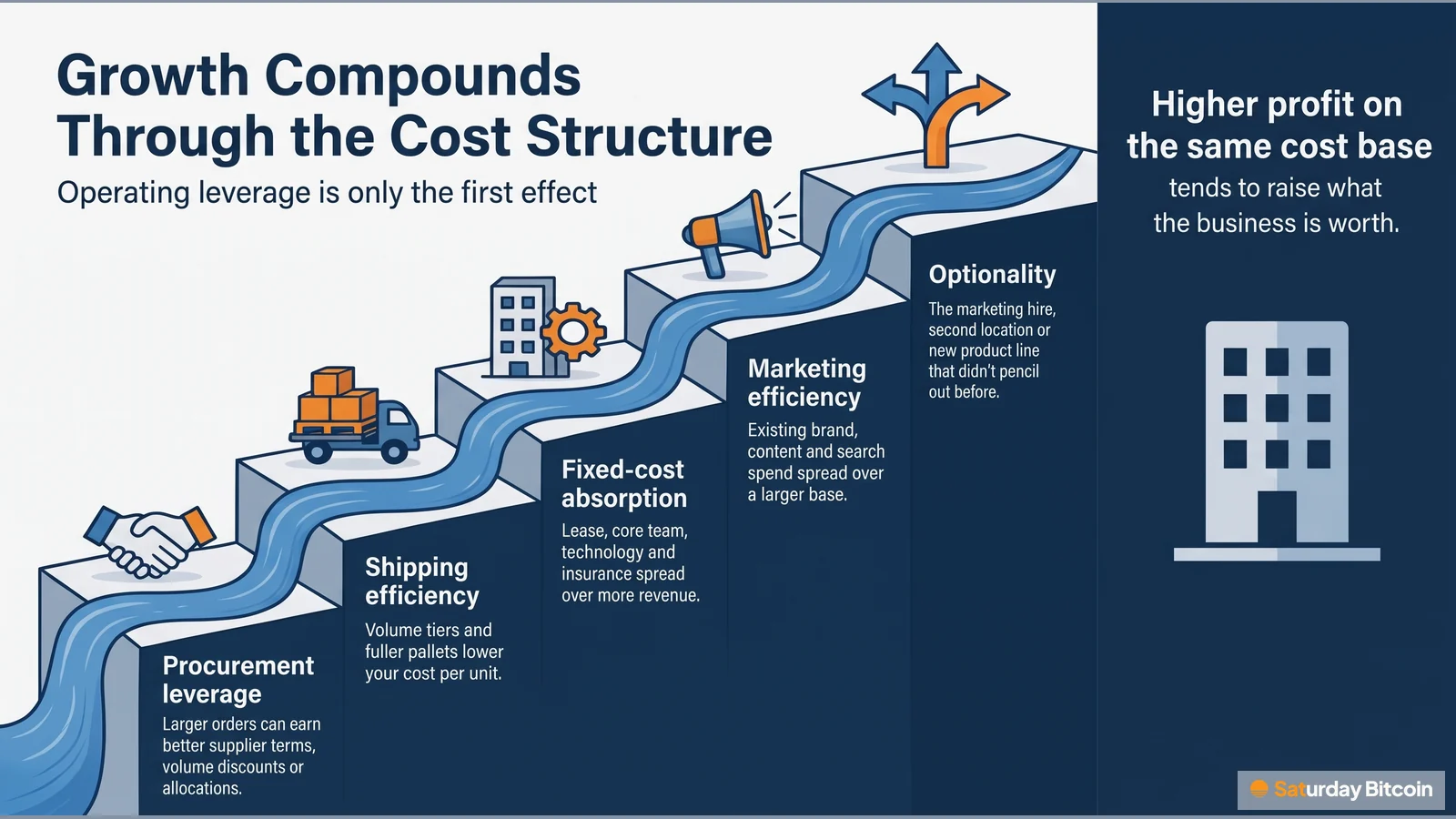
There is also optionality. A larger, more profitable business can justify the marketing hire, the second location or the new product line that didn’t pencil out before. And because business value tracks profitability, growth and defensibility, higher profit on the same cost base tends to raise what the business is worth.
Where this lands hardest: the $5M-$50M merchant
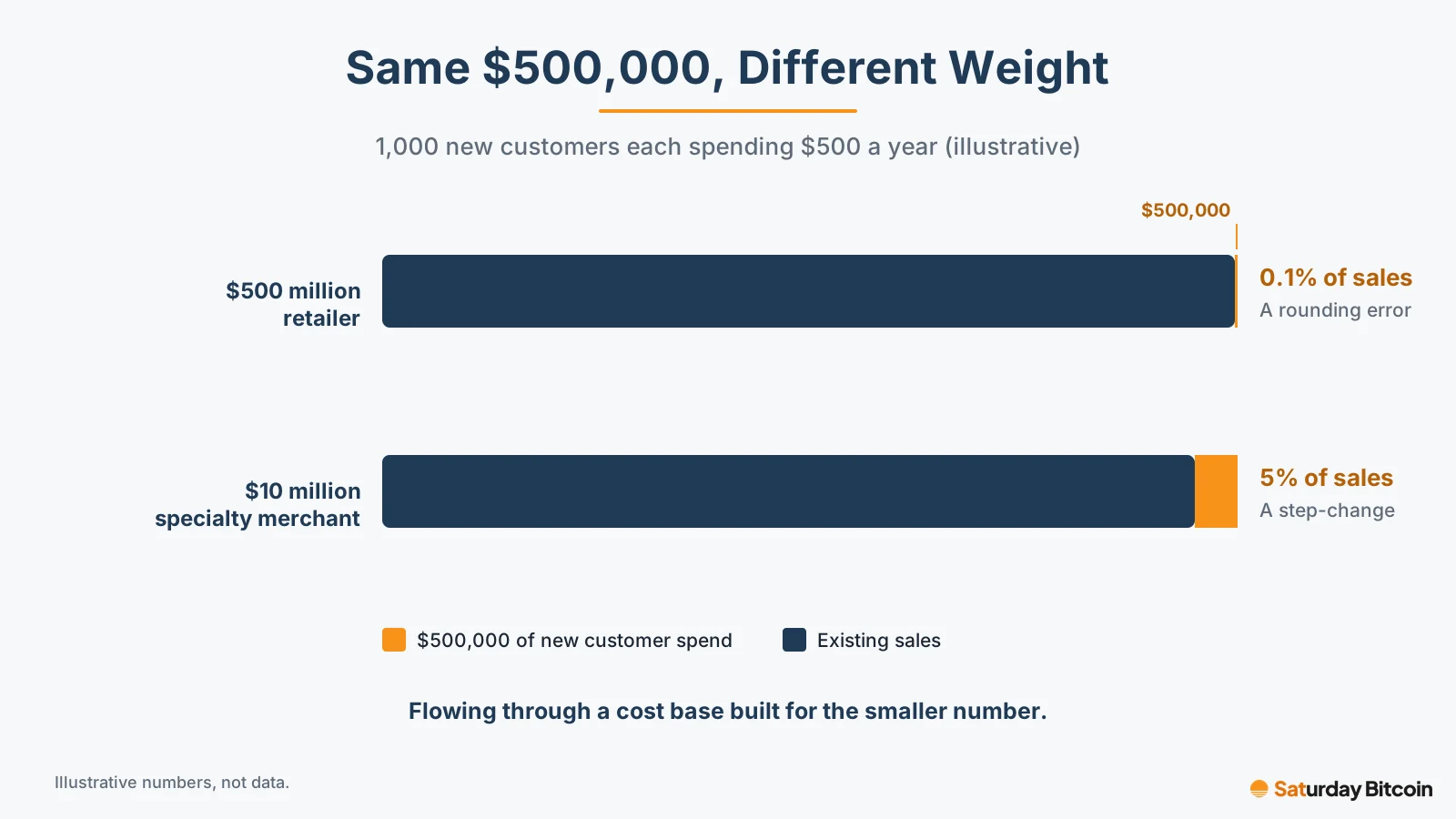
What’s a rounding error for a $500 million retailer is a step-change for a $10 million specialty merchant. Say 1,000 new customers each spend $500 a year (again, illustrative). That’s $500,000: 0.1% of the large retailer’s sales, but 5% of the specialty merchant’s, flowing through a cost base built for the smaller number.
This is sharpest in fragmented categories, such as wine, specialty foods, outdoor gear, supplements and artisanal goods, where no one merchant dominates and being the Bitcoin-friendly option in the category can set you apart.
Two sides of the same ledger
Bitcoin touches profit from two directions.
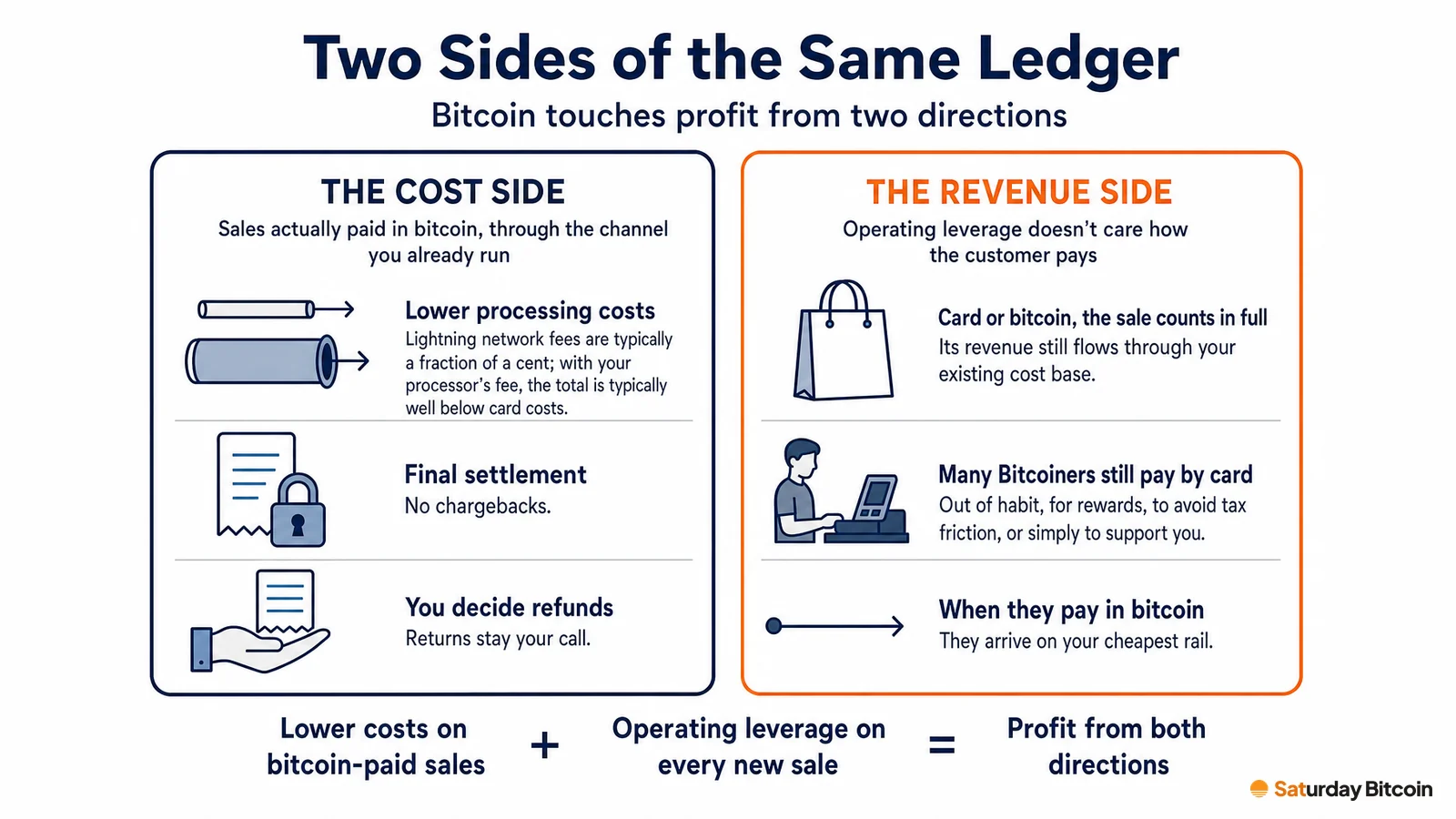
On the cost side, sales actually paid in bitcoin through the channel you already run carry lower processing costs, final settlement and no chargebacks, and you decide refunds. For context, online card payments average about 2.3% + $0.25 on Visa, Mastercard and Discover, and about 3% + $0.25 on Amex. Lightning network fees are typically a fraction of a cent; processors may add their own fee, but the total is typically well below card costs.
On the revenue side, there’s operating leverage, and it doesn’t care how the customer pays. Many Bitcoiners still pay by card out of habit, for rewards, to avoid tax friction, or simply to support you. That sale counts in full, because its revenue still flows through your existing cost base. We bring you the customer. When they pay in bitcoin, they arrive on your cheapest rail.
Where Saturday Bitcoin fits
Saturday Bitcoin is a discovery directory. It helps Bitcoiners find merchants that already accept bitcoin, online and nearby. The people who find you there are looking for a merchant like you, so much of what they spend is likely incremental: customers your current marketing wasn’t reaching, served by the infrastructure you already pay for.
As Accepting Bitcoin Isn’t Enough argues, a bitcoin button no one knows about is a channel nobody is watching. A verified listing changes that. You can claim it for free, add a welcome offer for first-time Bitcoiner customers, and get featured.
The honest limit
Operating leverage amplifies new revenue. It doesn’t create it. The committed Bitcoiner segment is real but small: an estimated ~1 million committed, mission-driven Bitcoiners in the U.S., and growing, within the tens of millions of Americans who own some bitcoin. A listing is discovery, not a guarantee of volume. Some customers who find you would have bought anyway. Your product and price still have to be right. And because we aren’t a payment processor, we can’t see your sales, so you’ll measure the result yourself.
Run your own number
Divide your contribution margin by your operating margin. That’s what each genuinely new customer is worth to you relative to your average one. Then put yourself where Bitcoiners are looking: claim your free listing at saturdaybitcoin.com/business.