
Bitcoiners have talked for years about becoming single-issue voters: backing politicians on their bitcoin policy alone, whatever else they stand for. The idea is that a committed minority, focused on one issue, can carry more weight than its numbers suggest.
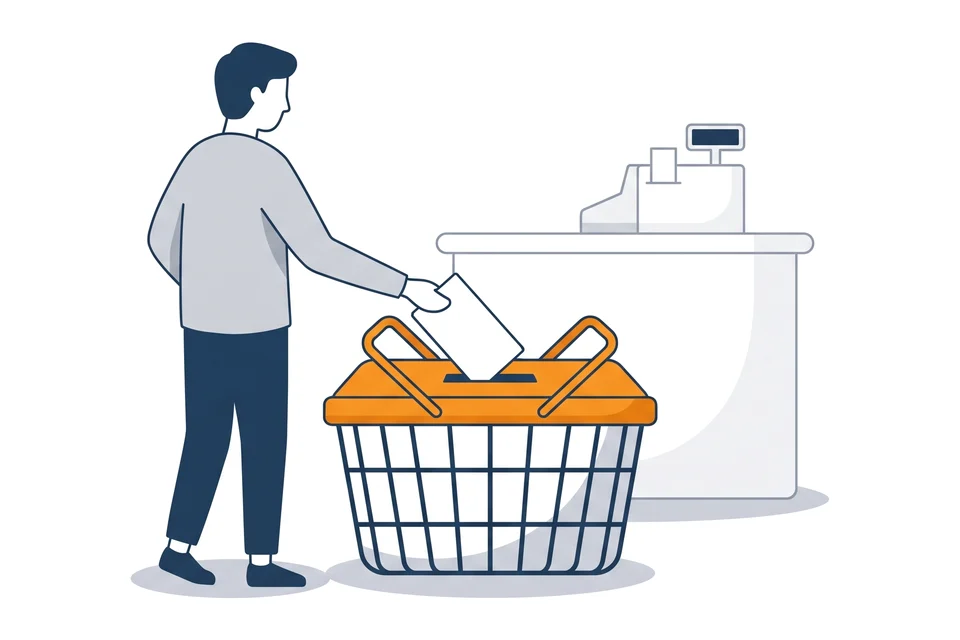
There is a parallel strategy, and you can practice it far more often: becoming a single-issue shopper. Instead of voting for Bitcoin-friendly politicians once every few years, you vote for Bitcoin-friendly merchants every week, with where you spend. Vote with your wallet. Merchants count votes every day.
Why single-issue voting works, and where it stalls
Single-issue voting works because of intensity. Most voters care about many issues moderately. A single-issue voter cares about one issue intensely, and politicians respond more to intense preferences than to diffuse ones. There is also an asymmetry. Candidates who support bitcoin gain these votes. Candidates who oppose it lose them and don’t pick up other votes instead, because few, if any, voters are single-issue voters against bitcoin.
Vote with your wallet. Merchants count votes every day.
But voting has limits. Elections come every two to four years. Politicians can promise and not deliver. Your individual vote has minimal impact, results take years, and the bloc has to reach critical mass before it registers at all.
Single-issue voting is useful. Single-issue shopping takes it further.
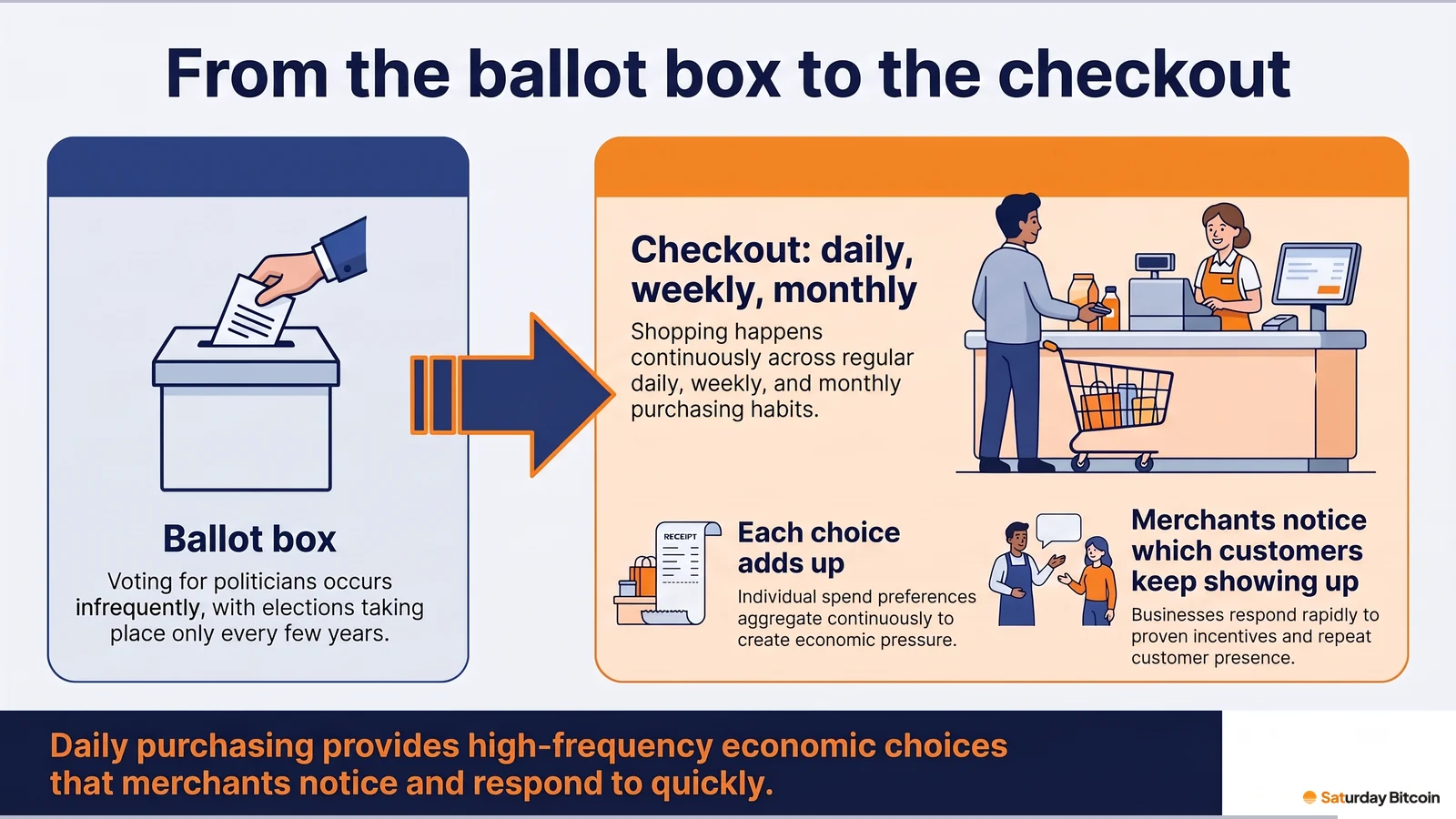
From the ballot box to the checkout
Apply the same principle to commerce. Committed Bitcoiners make Bitcoin-friendliness a first filter when choosing where to shop. They reward the merchants who welcome bitcoin with their repeat business, and when a comparable merchant doesn’t, they take that business to the one that does.
The difference from voting is frequency and feedback. You shop constantly: daily, weekly, monthly. Each choice adds up with other Bitcoiners’ choices. And merchants respond to proven economic incentives faster than politicians respond to almost anything. A merchant doesn’t have to like bitcoin, understand bitcoin or care about decentralization. A merchant just has to notice which customers keep showing up, and why.
The economic pressure mechanism
In most categories, merchants compete on product, price, service, brand and convenience. Payment acceptance is a given. Everyone takes cards, so nobody stands out by taking them.
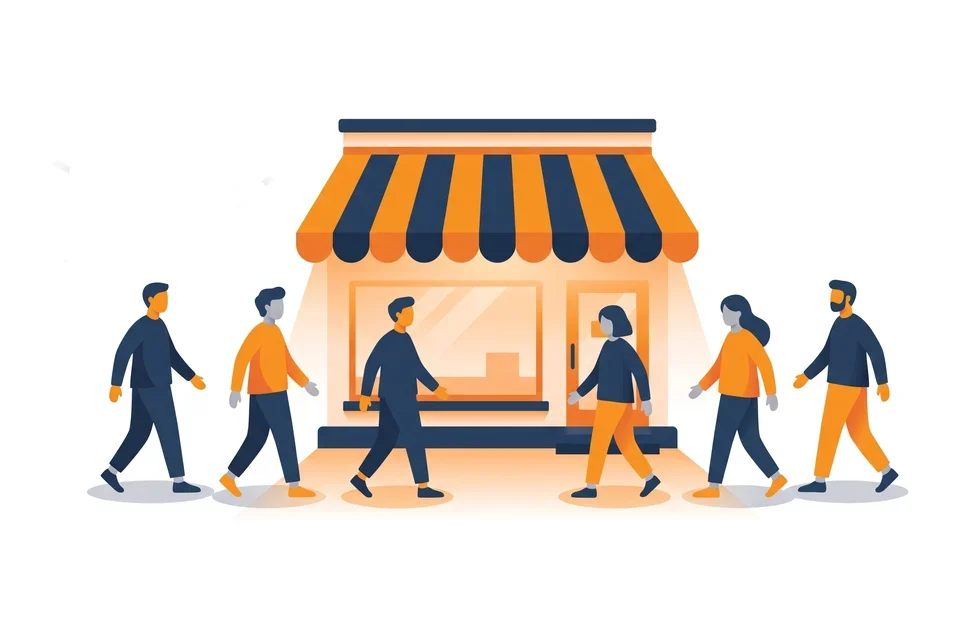
Single-issue shoppers change that. When Bitcoiners actively seek out Bitcoin-friendly merchants, being Bitcoin-friendly becomes a way to win customers, and not being Bitcoin-friendly means watching some of them go to a competitor who is. Picture two comparable merchants in the same category, one that welcomes bitcoin and one that doesn’t. Nothing much happens when one Bitcoiner picks the first. Something does happen when thousands make the same choice, keep making it, and talk about it. The second merchant eventually faces a plain business question: what is it costing us not to be Bitcoin-friendly?
Redirect enough spend and Bitcoin-friendly becomes the winning strategy. Not because merchants were persuaded about bitcoin, but because their customers voted.
It doesn’t take a majority
Nassim Nicholas Taleb describes this dynamic in “The Most Intolerant Wins,” a chapter of Skin in the Game. His argument is that an “intransigent” minority, one that won’t bend on its preference, can force a flexible majority to adapt once it reaches a small share of the population; he suggests around three or four percent. His example is lemonade. People who keep kosher won’t drink a non-kosher product, everyone else doesn’t mind a kosher one, so producers often find it simpler to make everything kosher.
The same asymmetry applies here. Bitcoiners prefer Bitcoin-friendly merchants, and almost no one refuses to shop somewhere because it also accepts bitcoin. The preference cuts one way. It doesn’t take a majority. It takes a committed minority.
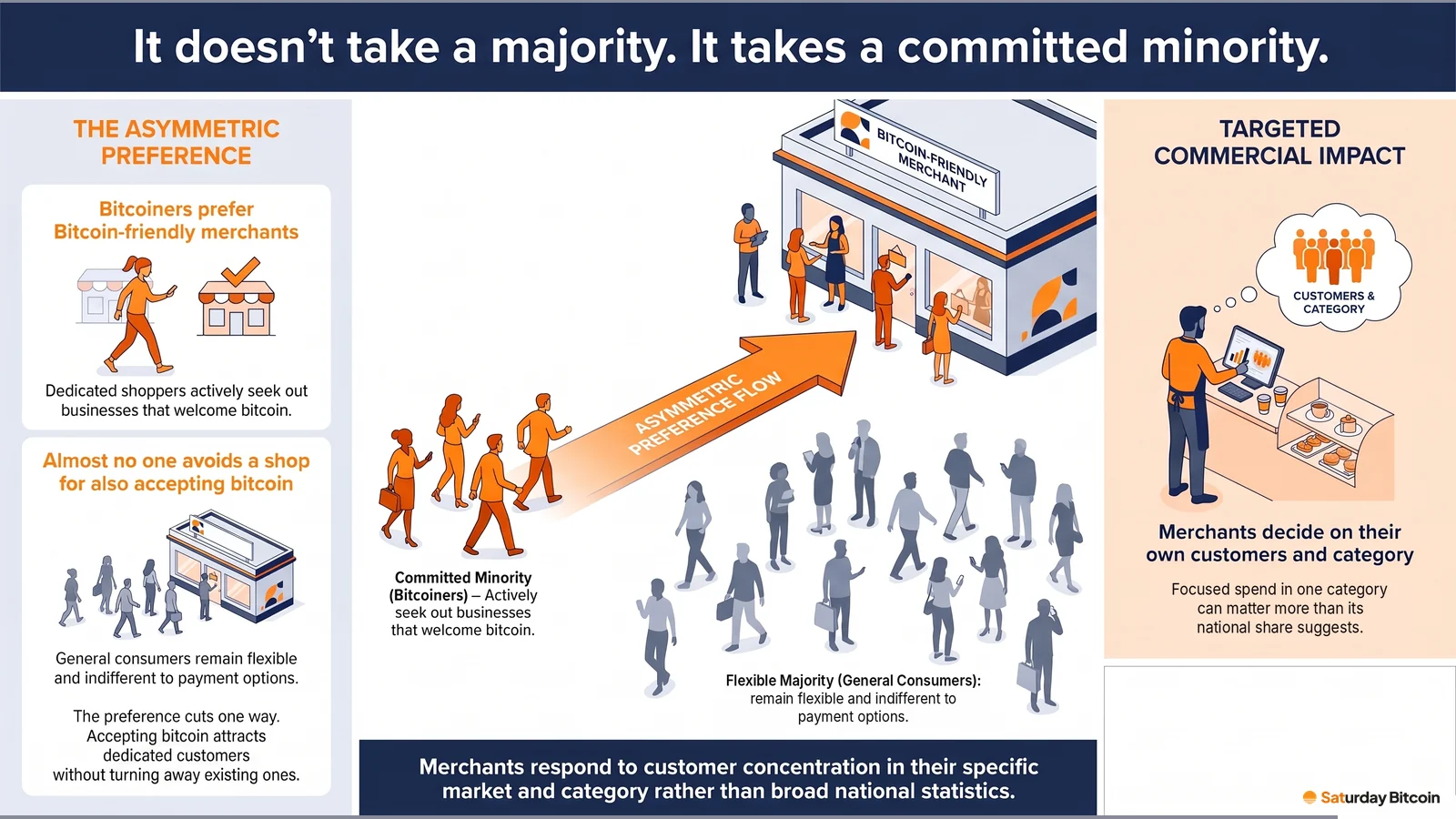
Be honest about the numbers, though. There are an estimated ~1 million committed, mission-driven Bitcoiners in the U.S., and growing. That is a conservative estimate; no direct survey exists. Tens of millions of Americans own some bitcoin, but most of them are not single-issue shoppers. Nationally, we are well short of Taleb’s rough threshold. Merchants don’t decide nationally, though. They decide on their own customers and their own category, where a committed group that concentrates its spending can matter more than its share of the population suggests.
We have already seen a hint of it. Steak ’n Shake began accepting bitcoin in May 2025, and its filed same-store sales rose by double digits in several quarters after, including +15.0% in Q3 2025 and +13.8% in Q2 2026. Bitcoiners weren’t the only driver; the chain also switched to beef tallow, changed its menu and remodeled restaurants. But Bitcoiners showed up, and they were loud about it. (We cover the case in A Fraction of the Segment: What Steak ’n Shake Proved About Bitcoiners.) A fraction of us helped do that. Imagine all of us.
Be loud about the first one
Bitcoiners do something most consumer groups don’t: we talk publicly about where we shop, on X and on Nostr. “This merchant is Bitcoin-friendly, go check them out.” One post like that is discovery, proof and free marketing at once, and other merchants see it.
That makes being first in a category special. The first coffee roaster, butcher or electronics retailer to welcome us took a visible step before it was obvious, and deserves to be celebrated for it. So be loud about the first merchant in a category that welcomes us. Post about them, review them, send friends their way. When the first one wins visibly, the second and third take notice. Today Bitcoin-friendliness is a differentiator; one day it will be table stakes.
The honest limits
This is a long game with a clear mechanism, not a switch you flip.
- Coverage takes time. You can’t be a pure single-issue shopper in a category with no Bitcoin-friendly merchant yet, and early on the choices are thin.
- Product, price and service still matter. If the Bitcoin-friendly option is significantly worse, rational shoppers will go elsewhere, and should. Single-issue shopping decides between comparable options. It doesn’t rescue a bad one.
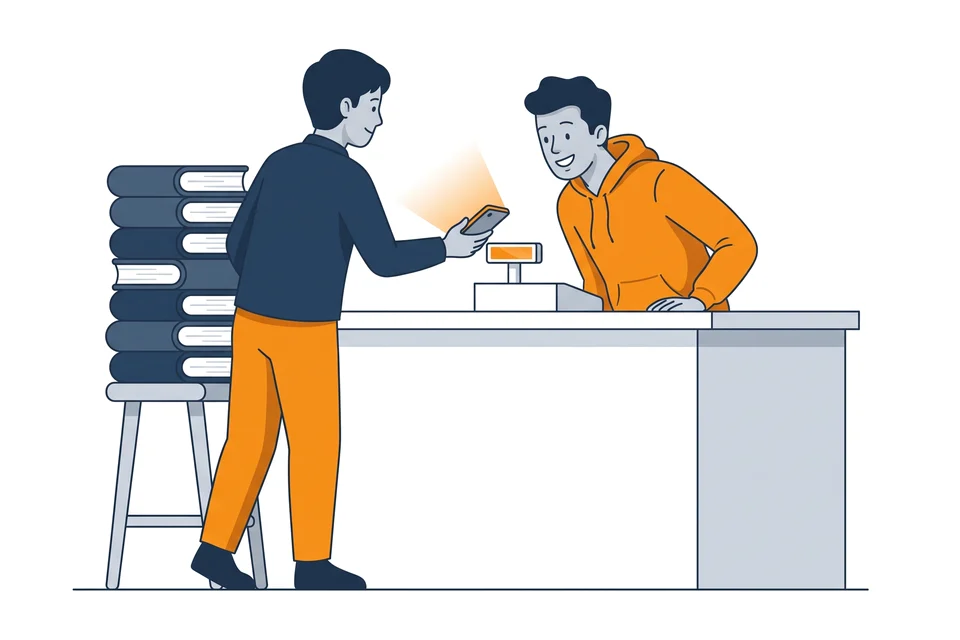
- How you pay is your call. Paying in bitcoin is the strongest signal, and it gives the merchant lower processing costs and final settlement on that sale. But many Bitcoiners still pay by card: out of habit, for card rewards, to avoid tax friction, or because they want chargeback protection with a merchant they don’t know yet. You are still a customer who chose them because they welcome bitcoin, and that still counts.
- Not every Bitcoiner will do this. Some put convenience first. Some are passive holders.
None of these limits is permanent, but they constrain near-term impact. The path runs through critical mass. As more Bitcoiners concentrate their spending, merchants notice, the first movers in each category become visible success stories, competitors follow, and eventually being Bitcoin-friendly is simply expected. The timeline depends on all of us. The direction is clear.
One category is a vote. Every category is a movement.
Think of your monthly spending as a jigsaw: groceries, coffee, supplements, electronics, apparel, dining, travel. Each piece you fill with a Bitcoin-friendly merchant is a vote. The puzzle doesn’t have to be complete to matter; routing even part of your spend through Bitcoin-friendly merchants sends a signal. And each new merchant makes the strategy easier for everyone, because it fills a gap for many Bitcoiners at once.
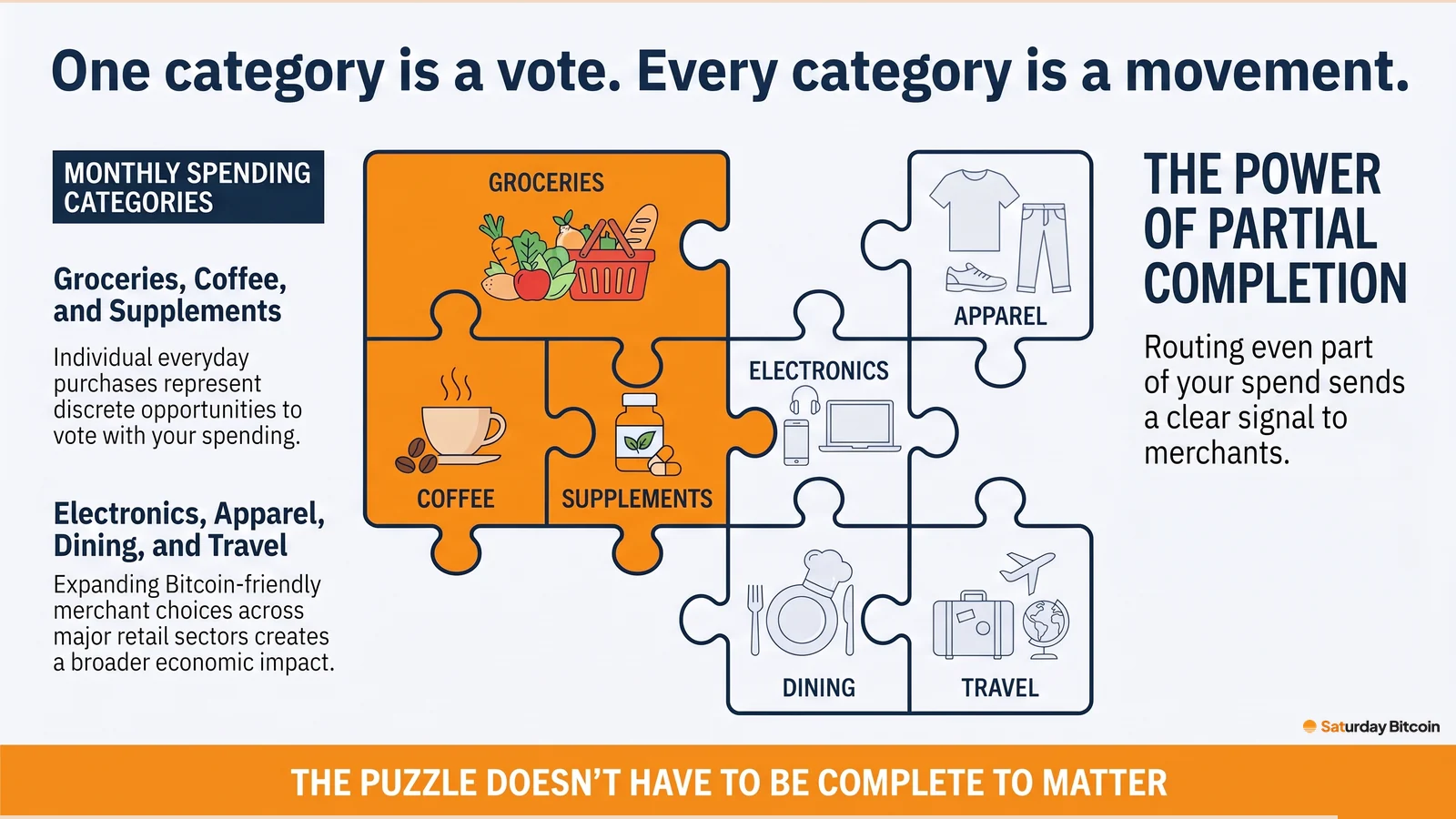
That’s why joining matters. The larger the community finding, saving and sharing Bitcoin-friendly merchants, the stronger the case the next merchant hears, and the better the experience for everyone. Every Bitcoiner who joins makes it easier to bring the next merchant.
Where Saturday Bitcoin fits
Saturday Bitcoin is a free directory of merchants that already accept bitcoin, online and nearby, with tens of thousands of places listed. You can browse by category, save the merchants you like and share them with friends. Some merchants have claimed their listing and added a welcome offer for Bitcoiners. We are not a payment processor and can’t see your purchases. The vote is yours to cast; we make it easier to find where to cast it.
Cast a vote this week
Pick one thing you buy regularly. Find a Bitcoin-friendly merchant for it at saturdaybitcoin.com, save it and share it. If it’s the first one you’ve found in its category, say so loudly.